
 English
 Español
 Português
 Русский
 العربية
 Français
 Deutsch
 中文
中文 日本語
日本語 한국어
한국어Manufacturing Curved 光学 Covers and Molded Lens Components

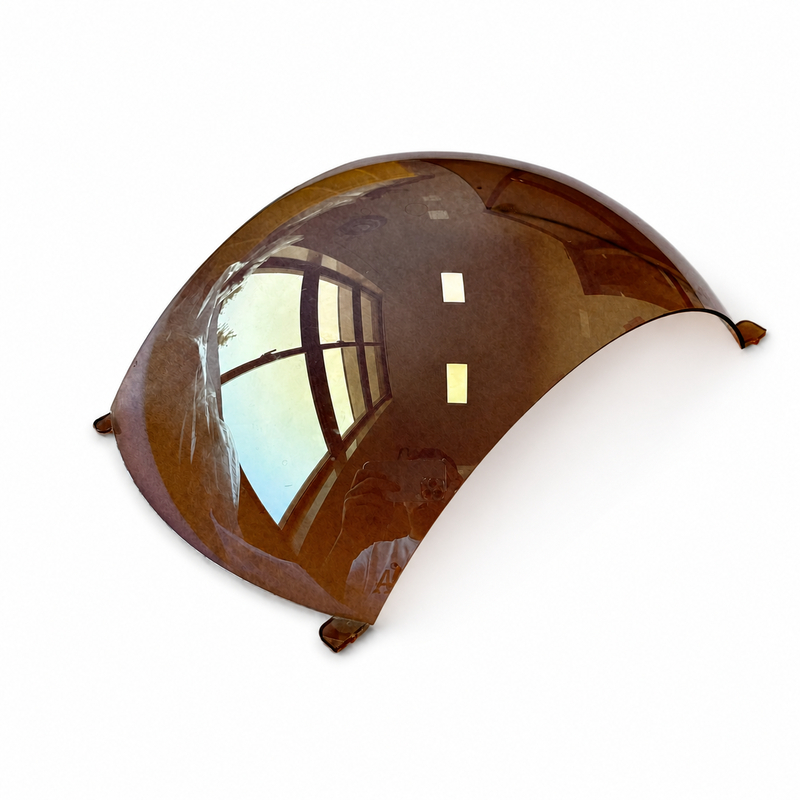
The parts shown in this manufacturing case represent a common optical moulding challenge: curved transparent surfaces must be developed together with the edges, locating features and assembly interfaces around them. A surface can look simple in CAD while still requiring careful decisions about wall thickness, resin flow, gating and release from the mould.
This group includes dome lenses, curved light covers, paired optical components and tinted optical masks. The engineering approach is adapted to the final optical, appearance, impact and assembly requirements defined for each project.
Application and Part Geometry
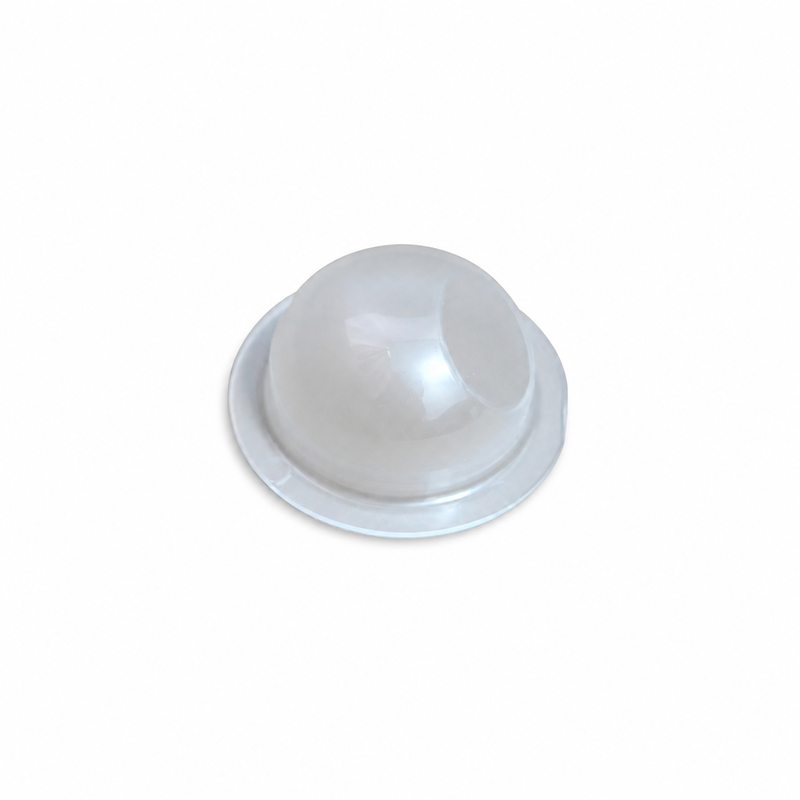
Curved optical components are used where light transmission, protection and product appearance meet in the same moulded part. The first review considers the required curvature, viewing area, edge definition, locating features and the relationship between the optical surface and its mating components.
Curvature and Wall-Thickness Review
Wall-thickness transitions can influence filling, shrinkage and the stability of the curved surface. During DFM, the part is reviewed for sudden thickness changes, local heavy sections and edge conditions that may affect replication or create visible flow differences.
The mould design is then developed around balanced filling and controlled cooling. The objective is to support consistent geometry while keeping ejector, parting-line and gate decisions away from the most important viewing areas wherever the design allows.
Gate and Weld-Line Planning
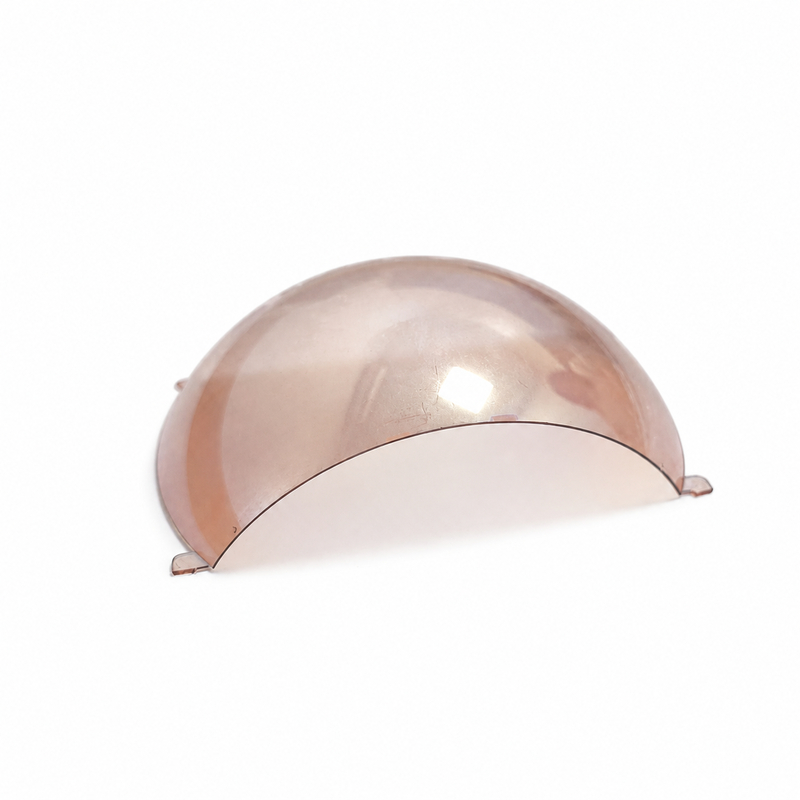
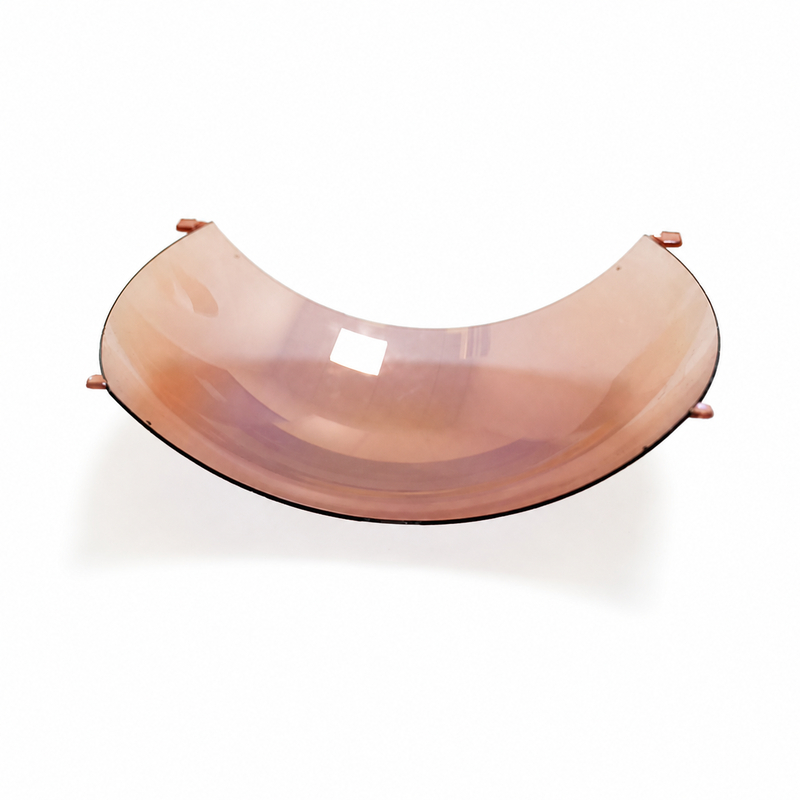
Gate position affects the way resin enters the optical area and how weld lines, flow marks and residual stress may develop. For paired or multi-feature optical parts, the flow path is reviewed together with cosmetic zones and later assembly operations.
Venting and release are also considered early. The mould must fill fine edges without trapping air, and the part must be removed without marking or distorting the functional surface.
Material and Appearance Requirements
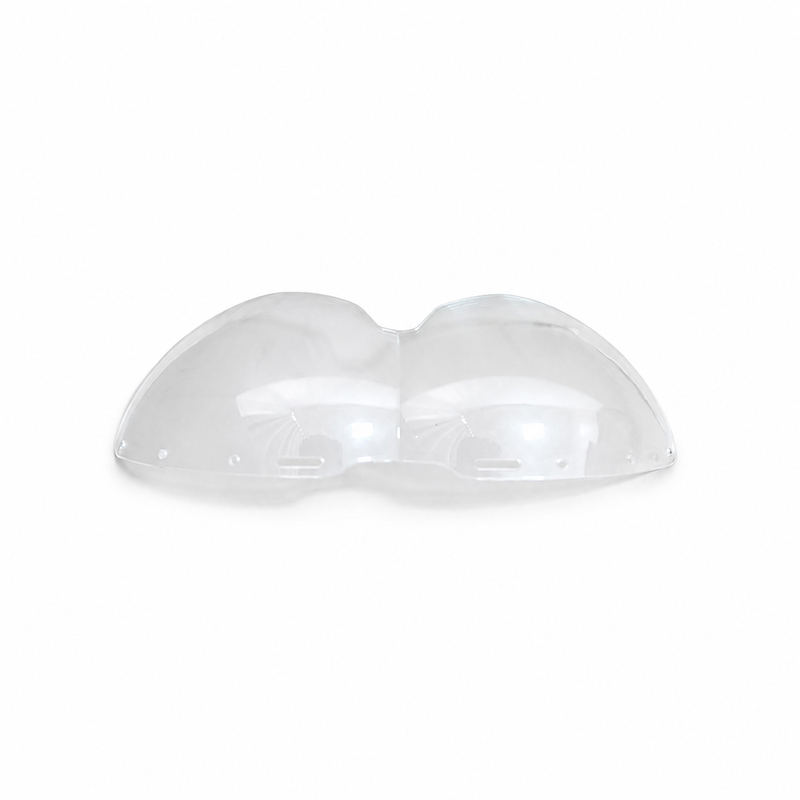
PC, PMMA, COP, COC and other optical or engineering resins may be considered depending on transmission, impact resistance, dimensional stability, tint and operating environment. Final resin selection is confirmed against the customer specification and the intended downstream process.
Trial Validation and Repeat Production
Trial samples are reviewed for curvature, appearance, edge quality, dimensional interfaces and assembly fit. Feedback from the trial is used to refine process settings or tooling details before repeat production. Inspection points are agreed around the features that directly affect optical performance, installation and visual acceptance.
See the related curved optical covers and moulded lens components, or contact the JingZhan engineering team to discuss a new optical component.
ともに精密金型を築きましょう
CADデータをアップロードするか、製品仕様をお知らせください。エンジニアリングチームが24時間以内に詳細なお見積りをご提示します。